01
Content & Growth
Content · Social · Sales DevelopmentFrom insight and creation to distribution and lead follow-up.

AIZHILAI AI DIGITAL EMPLOYEE
Build knowledge, tools, permissions and delivery standards around a real enterprise workflow. An AI employee does not answer everything for everyone—it completes one class of work within clear boundaries.
Role system
NOT A CHATBOT / A JOB SYSTEM
We combine role objectives, professional skills, company knowledge, tool permissions and delivery standards—so AI knows what to do, how good the result must be and when a person needs to decide.
Open Agent Skills thinking · engineered for enterprise work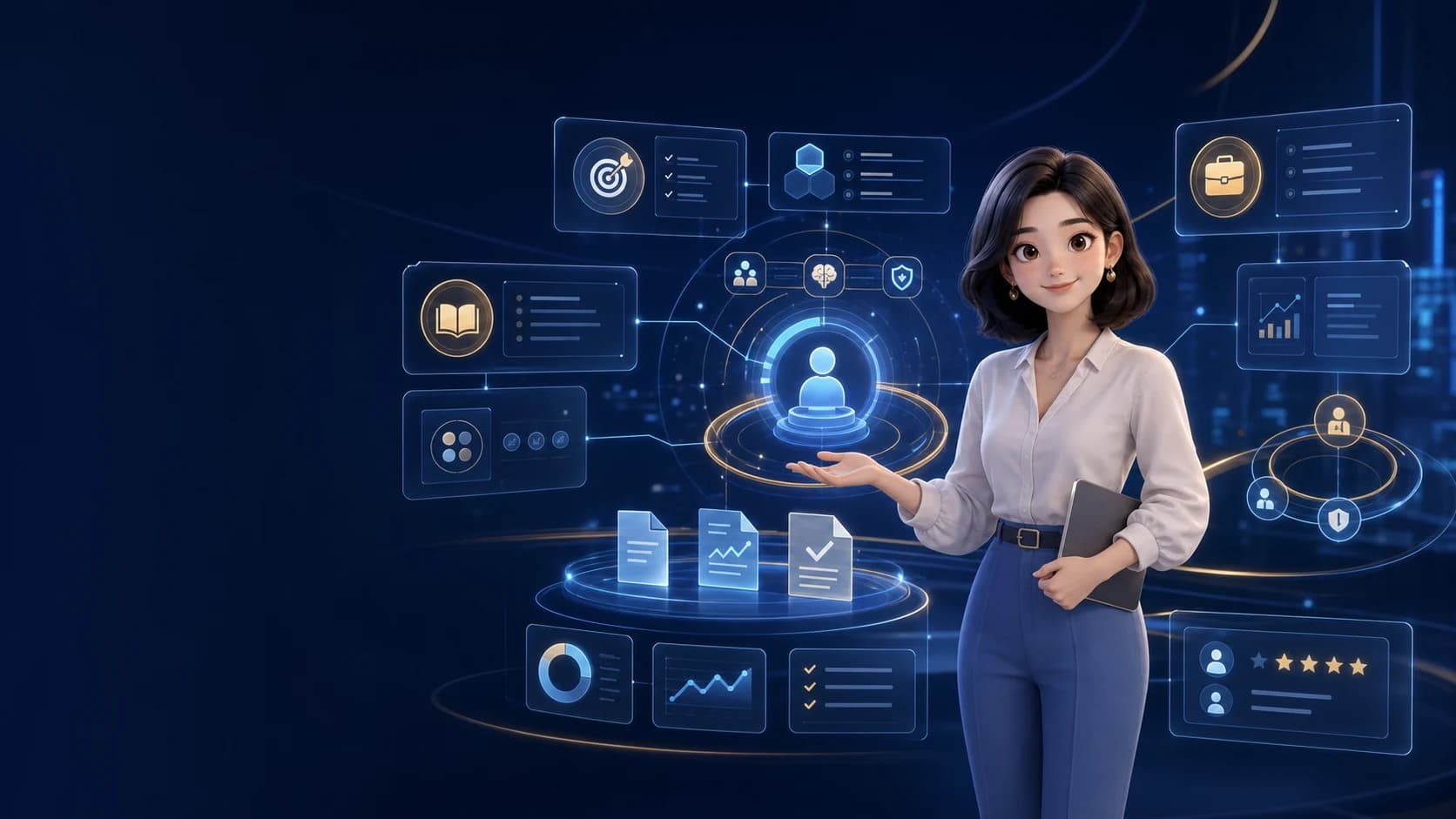
Clear ownership—and equally clear exclusions
Methods, judgment and execution steps made reusable
Policies, documents and experience loaded when needed
Only the systems required to complete the job
Templates, checklists and quality requirements
Exceptions, risk and key decisions return to people

Role teams
ONE BUSINESS / THREE TEAMS
Digital employees are organized around outcomes instead of displayed as disconnected assistants. Every role has a specialty and a defined handoff boundary.
From insight and creation to distribution and lead follow-up.
Turn documents, tickets and operating data into actionable conclusions.
Translate requirements into specifications, implementation, tests and verified delivery.
Real work
FROM REQUEST TO DELIVERY
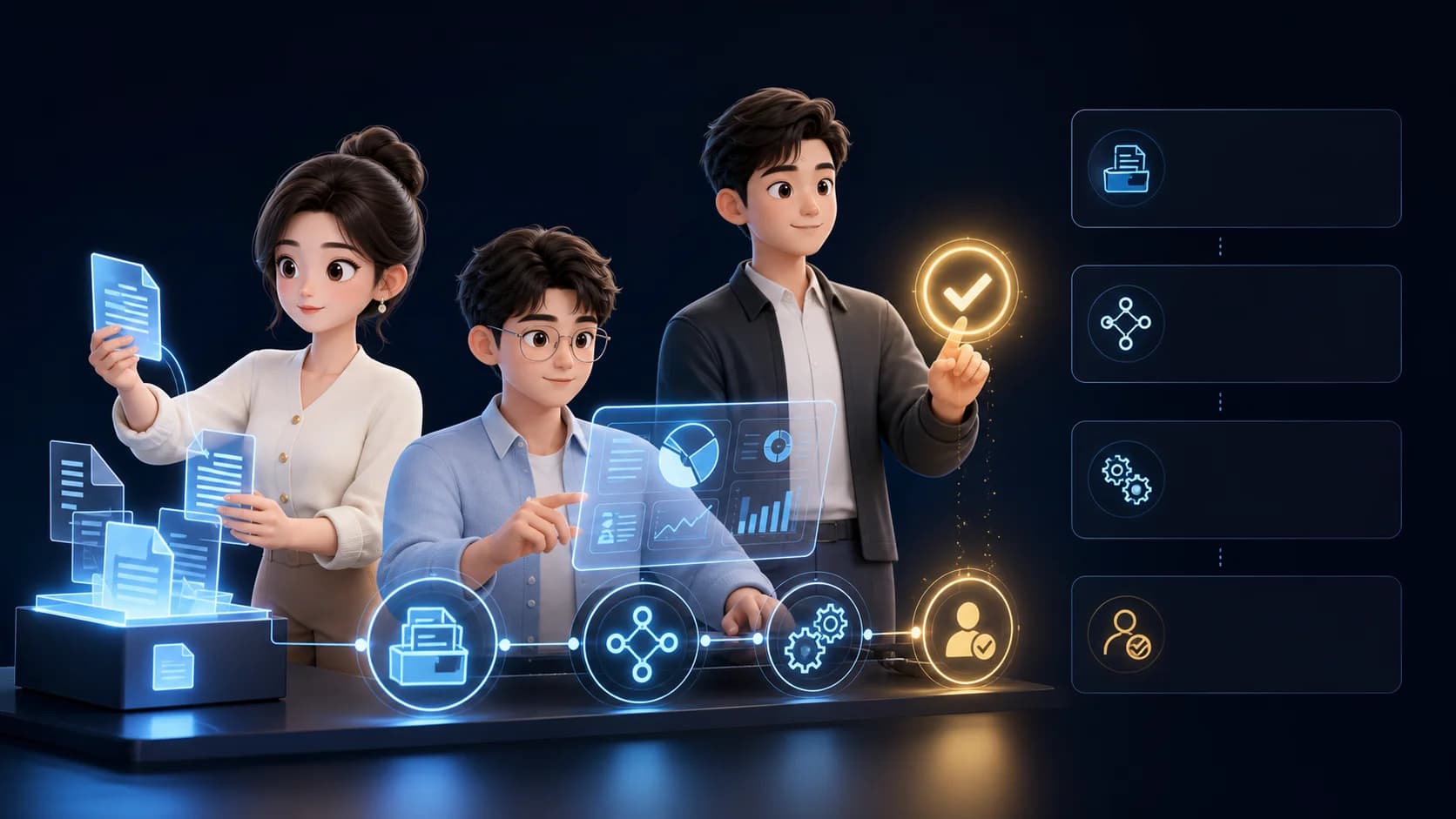
For a product-content request, the digital employee reads company material, routes the right skills, creates and checks every asset, then asks the owner to approve before publishing.

Controlled growth
CONTROL / REVIEW / IMPROVE
A useful digital employee needs more than capability. Permissions, review and evaluation remain explicit, and every run leaves evidence that can improve the next one.
Each role receives only the knowledge and tools needed for its work.
Publishing, external communication and critical changes require approval.
Sources, steps, tool calls and outcomes remain traceable.
Delivery quality and real feedback determine improvement or rollback.
Frequently asked questions
FAQ / AI DIGITAL EMPLOYEE
A chatbot mainly answers questions. An AI digital employee is configured for one role with company knowledge, professional skills, approved tools, delivery standards and escalation rules so it can complete a defined class of work.
Start with frequent, repeatable work that has clear information boundaries and verifiable outcomes, such as content operations, document processing, data analysis, customer support or development coordination.
No. Publishing, external communication, sensitive changes and high-risk decisions can require human approval. Exceptions are handed back to the designated owner through explicit escalation rules.
Each role follows least privilege: it reads only the information needed for the task and calls only approved tools. Sources, steps, tool calls and delivery results can remain observable and traceable.
YOUR FIRST DIGITAL COLLEAGUE
Tell us the role objective, available knowledge and everyday tools. We will assess the fit first, then propose a path you can verify.